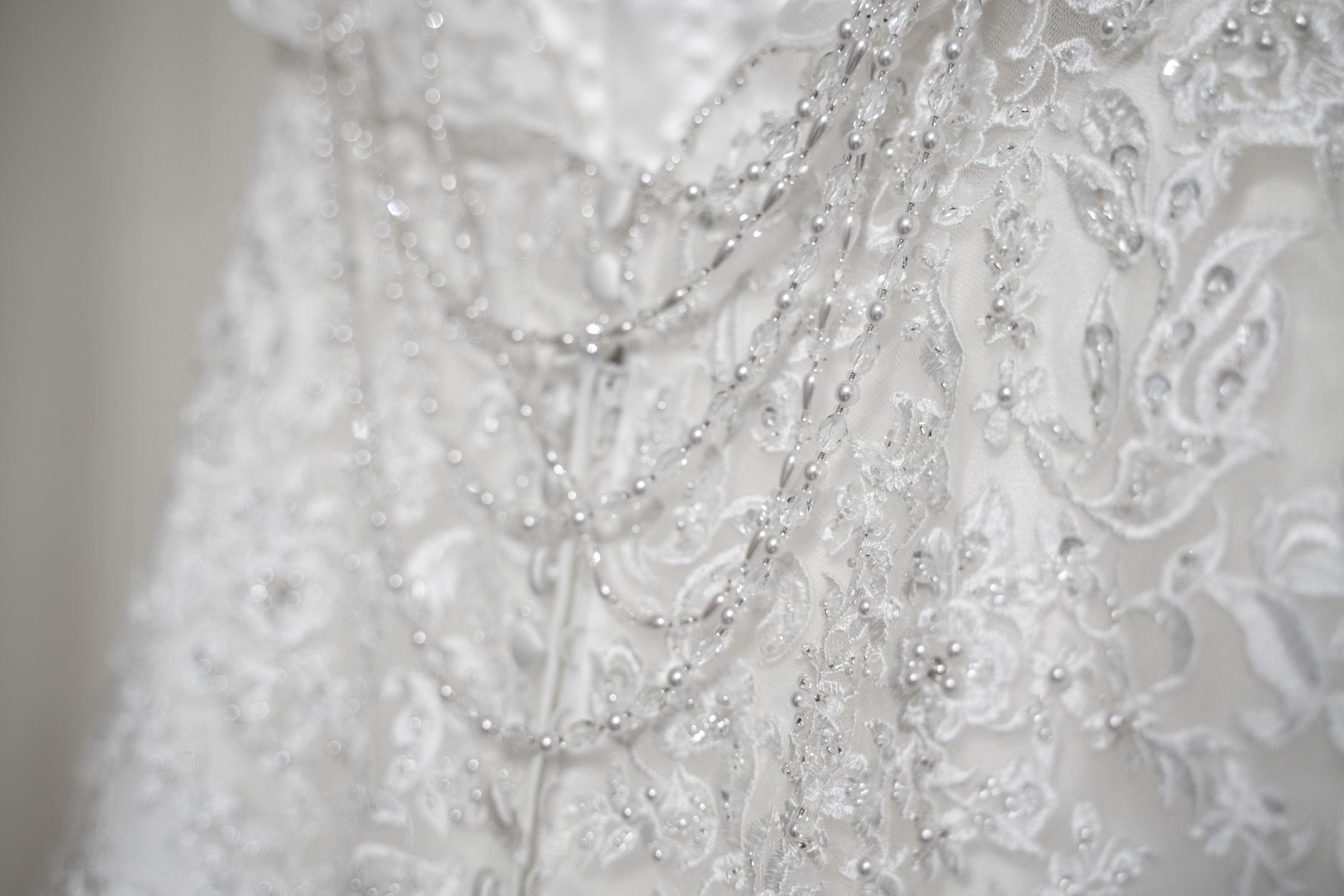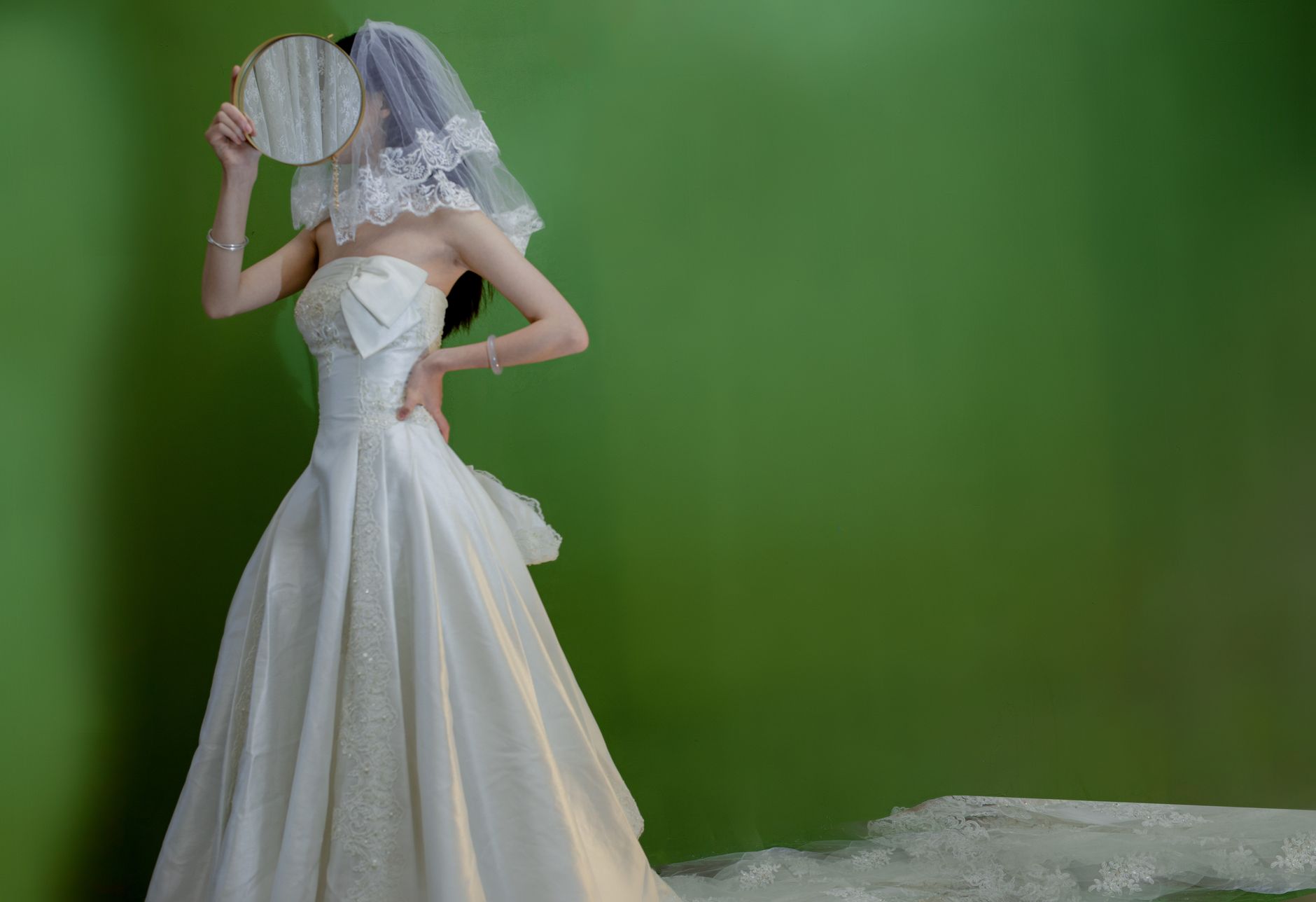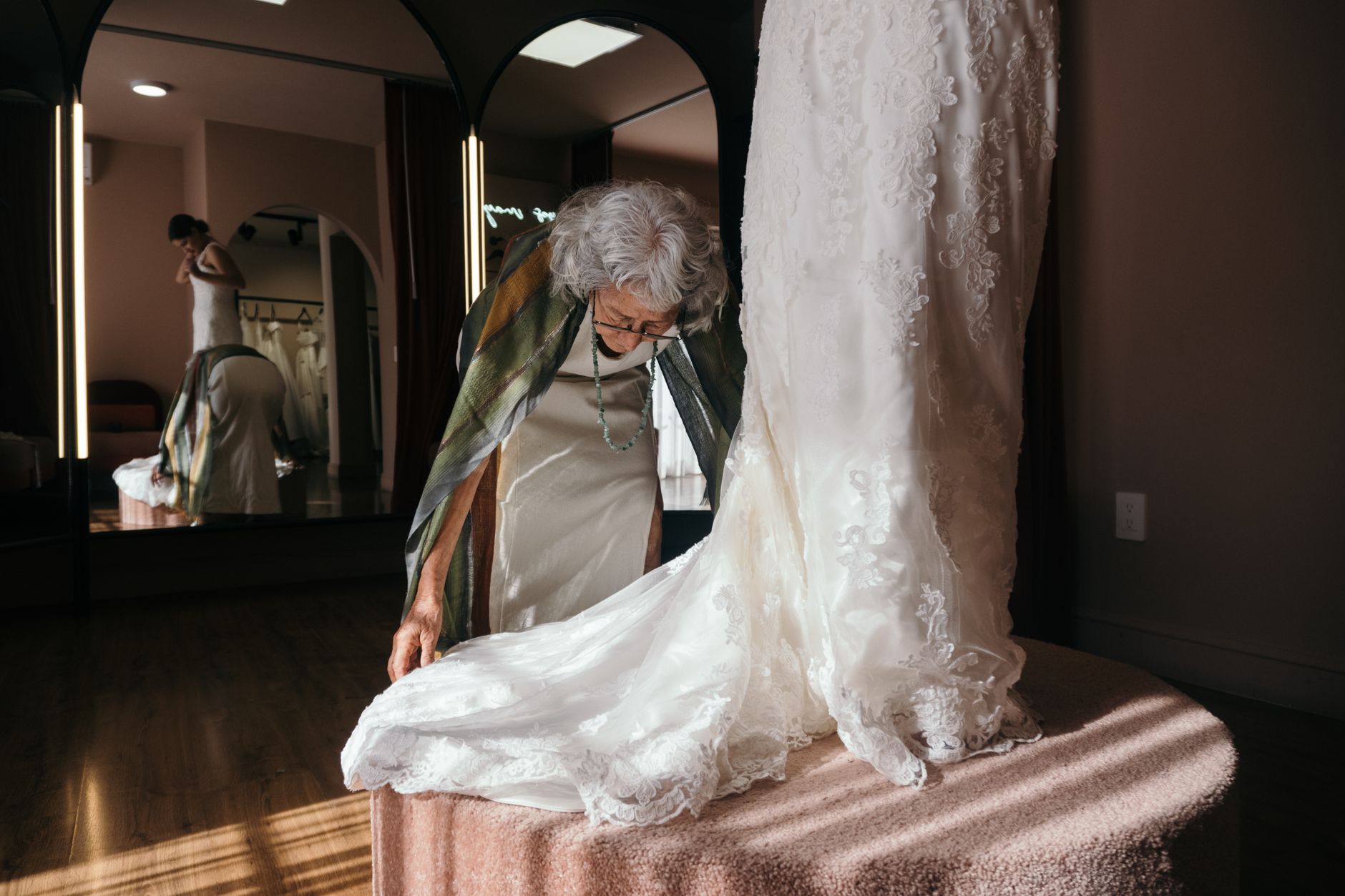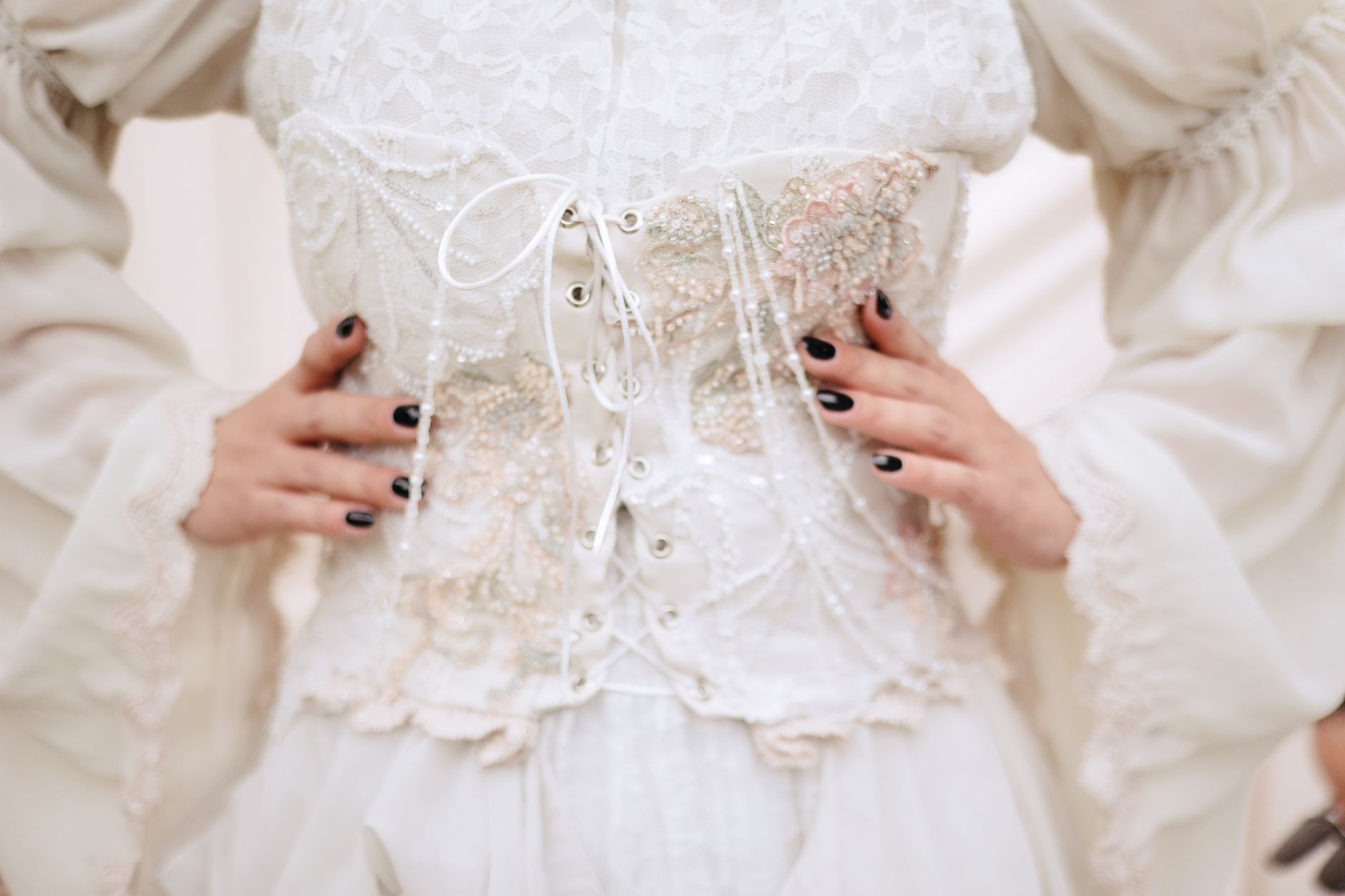
For a long time lace played a supporting role in a wedding gown: a band at the hem, an appliqué at the waist, a small motif on the shoulder. This season the balance has shifted. Lace increasingly carries the whole dress — bodice and skirt are cut from it, and everything else is deliberately quietened so the fabric can speak.
Two weights, two entirely different moods
One direction belongs to dense, sculptural laces with open cutwork: fabrics that hold their shape rather than fall. They sit beautifully on calm silhouettes — a narrow column, a gentle A-line, a firmly built bodice with no further ornament. The effect is more composed and more modern than most brides expect lace to be.
The other direction goes the opposite way: fine, almost transparent laces worked on tulle, sometimes with a hand-stitched flower that lifts barely a millimetre above the surface. These layer, float and answer every step you take. The same silhouette in two different laces gives you two different brides, and that is a difference best understood while wearing it.
Where the motif begins and where it fades
The quality of a lace gown is not measured by how much lace there is, but by how it is placed. A well-cut dress follows the motif across the seams until the join disappears, and the edge is often left irregular, so the lace grows out of the tulle with no visible hem. When the pattern thins towards the floor, the skirt reads lighter than it is; when it gathers density, you gain a weight that trails handsomely as you walk.
The lining settles the rest. A tone close to your skin turns lace into texture on the body, while a classic white lining returns it to a more ceremonial register. Softer laces also follow changes in the body well, which makes them a frequent choice for brides expecting a baby.
What to check at a fitting
- Scale of the motif. A large graphic pattern reads from the back row; a fine one only reveals itself close up, in photographs of hands and shoulders. Look at the gown in the mirror and from several steps away.
- Feel. Lace is worn for hours, against the skin. Check the neckline edge, the inner sleeve seam and the line under the arm.
- Light. Raised lace casts shadow in daylight and softens by candlelight. It is worth seeing both.
- Alterations. Ask how the dress will be taken in: with lace a seam moves slowly, motif by motif, and that takes time.
We keep lace gowns both to rent and to buy, in sizes 34 to 44, and every fitting is private and by appointment — unhurried, with time enough to compare two weights of lace on the same silhouette and see which one is truly yours.